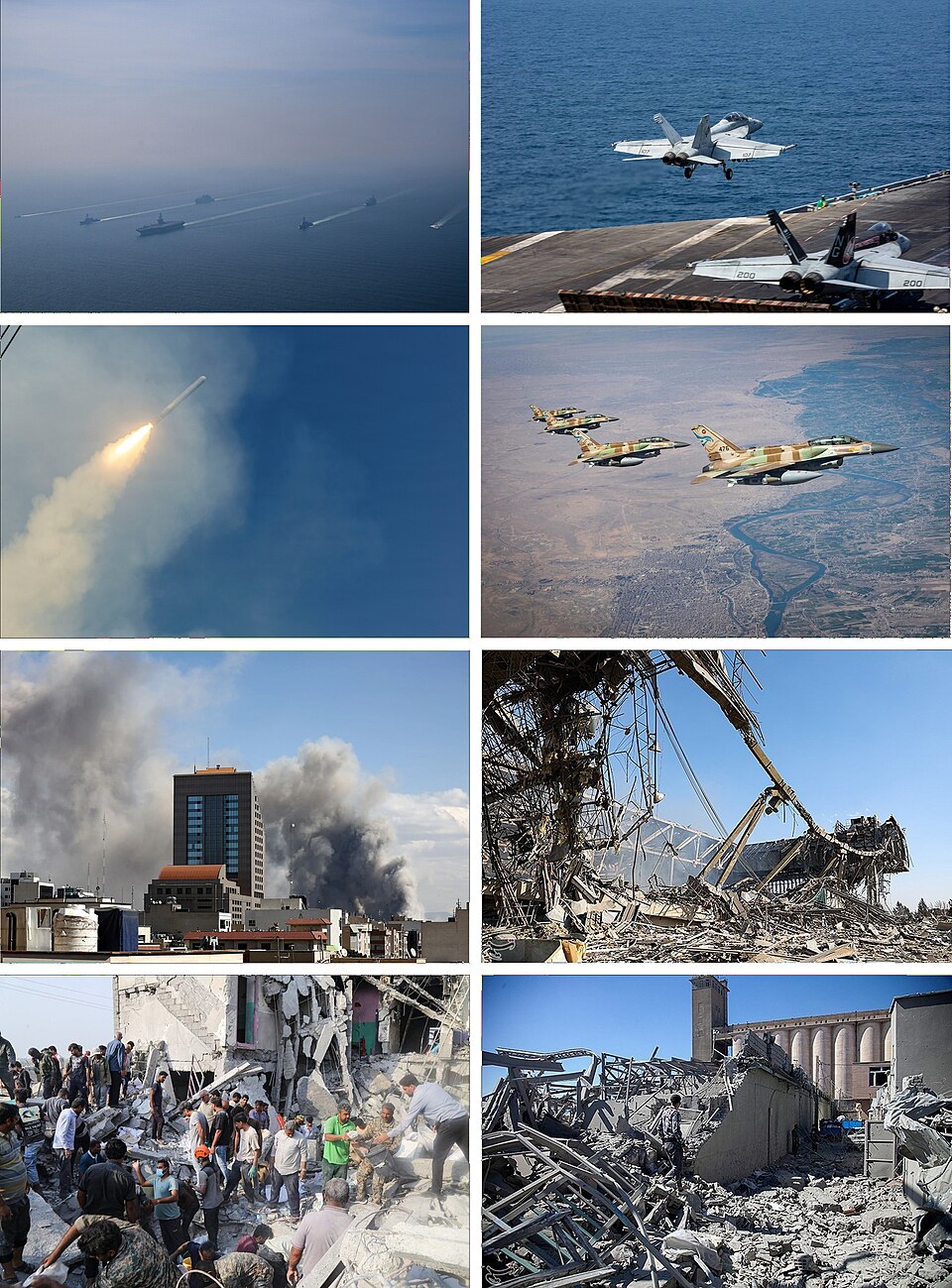
Middle East on Edge: US-Israel Strikes and Iran's Retaliation Escalates Regional Tensions
The Middle East, a region perpetually at the crossroads of geopolitical flux, finds itself once again teetering on the brink. Recent direct military exchanges between the United States and Israel on one side, and Iran on the other, have dramatically heightened tensions, raising the specter of a wider conflict. What began as targeted strikes against Iranian leadership and assets quickly escalated into a series of retaliatory actions, sending shockwaves across the globe and reigniting fears of a full-blown guerre moyen-orient iran.
This critical juncture is not merely a flashpoint but the culmination of decades of strategic maneuvering, proxy warfare, and deep-seated rivalries. Understanding the underlying dynamics—Iran's sophisticated regional strategy, the challenges to its "Axis of Resistance," and the significant economic and geopolitical ramifications—is crucial to grasping the gravity of the current situation. The delicate balance of power, long maintained through a complex web of alliances and antagonisms, now faces an unprecedented test.
Escalation in the Middle East: A Dangerous Tit-for-Tat
The recent surge in hostilities was triggered by a series of assertive military actions. Reports indicated that the United States and Israel launched coordinated strikes targeting key Iranian figures and strategic locations within Iran. These operations, allegedly designed to degrade Iran's military capabilities and leadership, resulted in the tragic loss of several high-ranking Iranian officials. Such direct assaults marked a significant departure from previous indirect confrontations, signaling a more aggressive stance from Washington and Tel Aviv.
Iran's response was swift and unyielding. Demonstrating its capacity for direct retaliation, Tehran launched a barrage of missiles and drones against Israel, several neighboring Middle Eastern nations, and various Western military bases strategically positioned across the region. This retaliatory salvo underscored Iran's resolve to defend its interests and project power, transforming what might have been a contained incident into a dangerous cycle of direct engagement. The implications are profound: the lines between proxy conflict and open warfare are blurring, pushing the region closer to a devastating guerre moyen-orient iran scenario with each successive strike.
Iran's Strategic Backbone: The Axis of Resistance and Proxy Networks
At the heart of Iran's regional influence lies its meticulously cultivated network of non-state actors, often referred to as the "Axis of Resistance." This strategy, conceived in the 1980s, involves providing political, material, and sometimes operational support to various militias and armed groups across the Middle East. Some of these entities were directly fostered by Iran, while others evolved into crucial tactical partners.
The primary architect and coordinator of this expansive network is the Islamic Revolutionary Guard Corps' (IRGC) Quds Force. Its mission is to synchronize and bolster the actions of these proxy militias, extending Iran's strategic depth and influence far beyond its borders. Key players in this network include the powerful Lebanese Hezbollah, which has become a formidable military and political force, and the Iraqi Badr Organization, a significant paramilitary and political entity. These particularly advanced groups have not only received support but have also played an active role in structuring and strengthening the broader Iranian paramilitary presence in the Middle East.
The Axis of Resistance has achieved undeniable successes in recent years. It proved instrumental in stabilizing the Syrian government against a protracted insurgency, effectively countered the advance of the Islamic State in Iraq, and challenged the Saudi-led intervention in Yemen. These victories cemented Iran's position as a pivotal regional power, capable of projecting influence and challenging adversaries through asymmetric warfare. This reliance on proxies provides Iran with plausible deniability, allowing it to exert influence without direct state-on-state confrontation, a strategy crucial in avoiding a full-scale guerre moyen-orient iran. For a deeper dive into this intricate strategy, explore Iran's Axis of Resistance: Strategy, Successes, and New Threats.
Mounting Challenges and Regional Instability
Despite its past successes, Iran's Axis of Resistance is now confronting significant headwinds. One of the most prominent challenges is the escalating confrontation with the United States. While initially gaining prominence during the Donald Trump administration, US policy continues to prioritize countering Iranian influence, leading to increased pressure, sanctions, and military posturing that directly threaten Iran's regional operations. This sustained pressure forces Iran to constantly recalibrate its strategies and allocate substantial resources to maintain its proxy networks, creating a constant state of low-level conflict that could easily spiral into a larger guerre moyen-orient iran.
Furthermore, Iran faces a growing tide of political and social unrest, both domestically and in countries where its networks are dominant. Within Iran, economic hardships, political repression, and calls for reform have fueled widespread discontent, challenging the legitimacy and stability of the ruling establishment. Similarly, in nations like Iraq and Lebanon, the very militia systems supported by Iran are increasingly being questioned by their own populations. Citizens in these countries often view these groups as instruments of foreign influence rather than genuine national defenders, criticizing their impact on sovereignty, governance, and economic development. This internal dissent weakens the foundation of Iran's external power projection and creates vulnerabilities that regional and international adversaries may seek to exploit. Understanding these internal pressures is key to predicting Iran's future actions; for more details, refer to Iran's Proxy Power: Facing US Confrontation and Regional Unrest.
Economic Repercussions and Geopolitical Fallout
The prospect of a widespread guerre moyen-orient iran holds dire economic and geopolitical consequences that extend far beyond the immediate battlegrounds. One of the most immediate and tangible impacts is on global energy markets. The Middle East is the world's primary oil-producing region, and the Strait of Hormuz, a crucial choke point in the Persian Gulf, is essential for a significant portion of global oil shipments. Any significant disruption or conflict in this area invariably sends crude oil prices soaring, destabilizing economies worldwide and contributing to inflationary pressures.
Beyond oil, increased instability impacts international trade routes, supply chains, and investment confidence. Businesses operating in or relying on the region face heightened risks, potentially leading to increased insurance costs, rerouting of goods, and delays in critical deliveries. For policymakers and multinational corporations, anticipating and mitigating these economic risks through diversification and contingency planning is paramount.
Geopolitically, the current escalations threaten to redraw the map of alliances and rivalries. Regional powers like Saudi Arabia, the UAE, and Turkey are closely watching, adjusting their foreign policies in response to the shifting dynamics. International actors, including the European Union, Russia, and China, find their diplomatic efforts complicated, often forced to choose sides or navigate a minefield of conflicting interests. The humanitarian cost of any broader conflict would be immense, adding to the already staggering numbers of displaced people and refugees in the region. The interconnectedness of modern geopolitics means that a regional war would undoubtedly trigger global ramifications, from increased defense spending to a renewed focus on energy security.
Navigating the Volatile Landscape: What Lies Ahead?
The future trajectory of the Middle East remains fraught with uncertainty. Several scenarios could unfold, ranging from a tense de-escalation to a protracted, region-wide conflict. Diplomacy, though often strained, holds the key to preventing the worst-case scenario. However, the deep-seated mistrust, divergent national interests, and the entrenched nature of proxy conflicts make any diplomatic breakthrough incredibly challenging. The role of international mediators and powers capable of engaging with all parties becomes more critical, yet their influence is often limited by the immediate realities on the ground.
For individuals and organizations monitoring the situation, several factors warrant close attention: the rhetoric and actions of key leaders, the stability of internal political landscapes in Iran and its proxy states, and the global response to any further escalations. The region's intricate web of alliances and rivalries means that a localized incident can quickly cascade, highlighting the need for cautious approaches and a comprehensive understanding of the multifaceted challenges at play. The absence of clear communication channels and a robust framework for de-escalation further exacerbates the risks of miscalculation.
The recent US-Israel strikes and Iran's subsequent retaliation have unmistakably pushed the Middle East closer to a precipice. The enduring strategy of Iran's Axis of Resistance, while a source of its regional power, now faces severe internal and external pressures. The escalating tit-for-tat exchanges carry dire economic and geopolitical risks, threatening global stability and prosperity. Preventing a full-scale guerre moyen-orient iran demands immediate, concerted international efforts to de-escalate tensions and foster dialogue. The alternative is a future of unimaginable regional devastation and global turmoil.